

The food service industry runs on thin margins, fast pace, and constant evolution. Whether updating a dining room concept, consolidating locations, replacing kitchen lines, or liquidating a multi-unit operation, restaurant owners and food service directors frequently face the challenge of managing unused, out-of-service, or surplus commercial kitchen equipment. A restaurant equipment liquidation auction can be the answer.
Idle equipment sitting in valuable square footage or off-site storage units does not just sit still—it active drains cash flow through ongoing storage fees, depreciation, maintenance, and tied-up equity. Turning that idle capital into working capital is one of the fastest ways to improve operational liquidity, fund capital improvements, or pay down existing obligations.
Partnering with an experienced restaurant equipment auction house through competitive liquidation auctions allows food service operators across New England to convert surplus appliances, stainless steel, and dining inventory into immediate cash cleanly and predictably.
1. The True Cost of Idle Commercial Kitchen Assets
Commercial kitchen machinery is engineered to endure high-volume use, making it inherently durable and valuable on the secondary market. However, when a kitchen redesign occurs or a facility closes, surplus assets frequently end up shoved into back rooms or paid storage lockers.
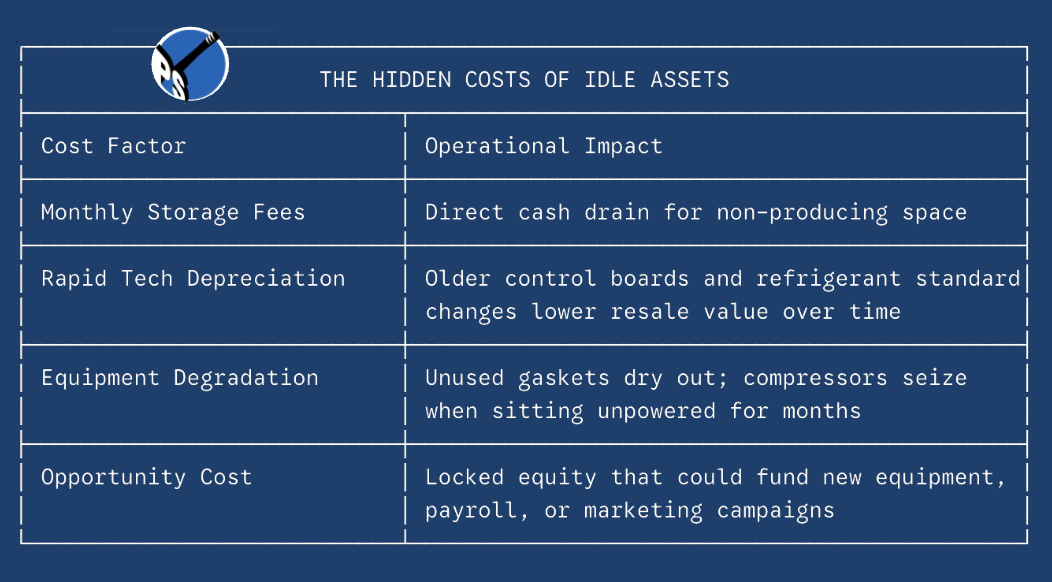
Holding onto non-performing equipment expecting a local buyer to stumble across a classified ad rarely delivers strong financial returns. Instead, a organized commercial kitchen liquidation establishes a firm timeline, generates competitive bidding tension, and returns valuable space back to active production.
2. Key Food Service Asset Categories that Drive Auction Value
When liquidating restaurant and commercial food service infrastructure, items fall into specialized lotting tiers.
Understanding what buyers actively look for ensures proper cataloging and higher recovery prices.
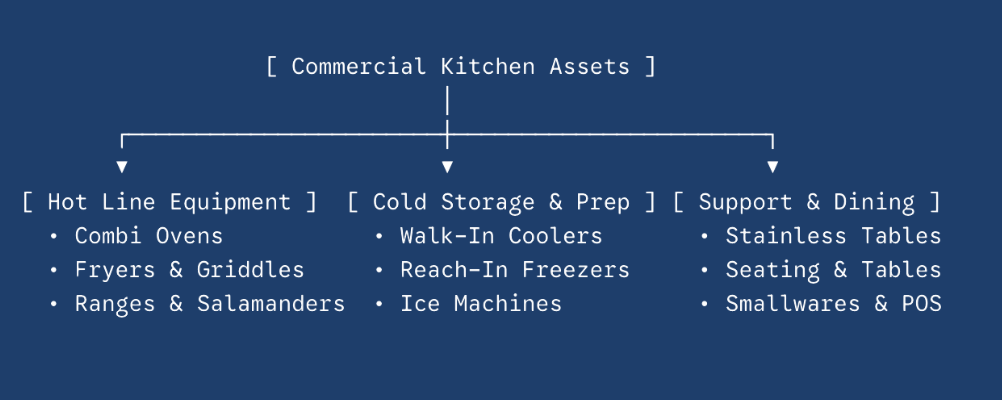
High-Demand Hot & Cold Line Equipment
Hot line cooking equipment—such as combi ovens, convection ranges, heavy-duty fryers, charbroilers, and tilt skillets—retains high secondary market value due to steep original retail prices. Brand-name hot line items from manufacturers like Vulcan, Rational, Garland, and Frymaster regularly attract competitive bidding from independent operators, caterers, and food trucks.
Refrigeration assets, including reach-in coolers, sandwich prep tables, blast chillers, and self-contained ice machines (Hoshizaki, Manitowoc, True Refrigeration), are universal operational needs. Because every food service venue requires cold storage, these items consistently generate broad buyer engagement.
Stainless Steel Work Infrastructure & Dining Room Fixtures
- Custom & Modular Stainless Fabrication: Underbar equipment, dish tables, multi-compartment sink stations, and heavy-gauge prep tables hold structural integrity indefinitely and remain high-priority auction targets.
- Dining & Front-of-House Furnishings: Hardwood chairs, booth seating, bar tops, and outdoor patio sets sell well when lotted in clean, uniform counts.
- Specialty Smallwares & Support Systems: POS hardware, commercial espresso machines, slicers, planet mixers (Hobart), and bulk food prep tools wrap up complete facility liquidations.
3. Why Private Negotiations Fall Short Compared to Liquidation Auctions
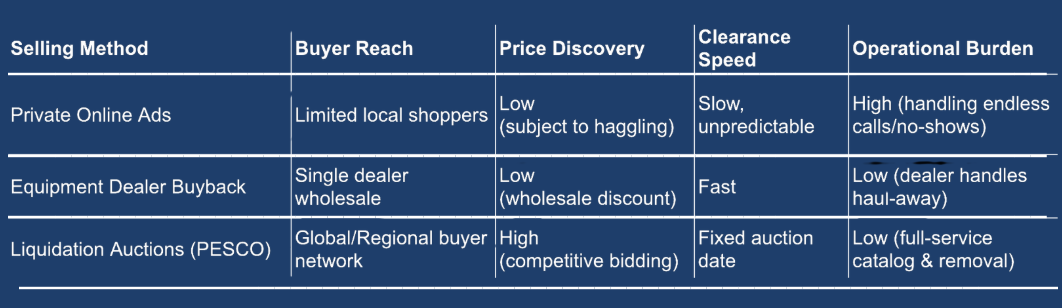
When liquidating surplus kitchen lines, operators often try standard private sales, dealer buybacks, or online marketplaces. While these avenues seem straightforward, they routinely yield suboptimal financial outcomes.
The Competitive Bidding Engine
An auction operates on competitive tension. Rather than negotiating down with a single buyer looking for a bargain discount, an auction brings dozens of qualified end-users—such as expanding restaurant groups, regional caterers, institutional cafeterias, and food truck startups—together simultaneously. Buyers compete upward to secure quality, late-model commercial equipment at fair market values, driving higher net recovery for the seller.
4. The End-to-End Liquidation Process with Paul E. Saperstein Co.
Executing a successful commercial kitchen liquidation requires meticulous hands-on management. Transporting heavy appliances, disconnecting gas and water lines safely, and managing buyer removal requires specialized oversight.
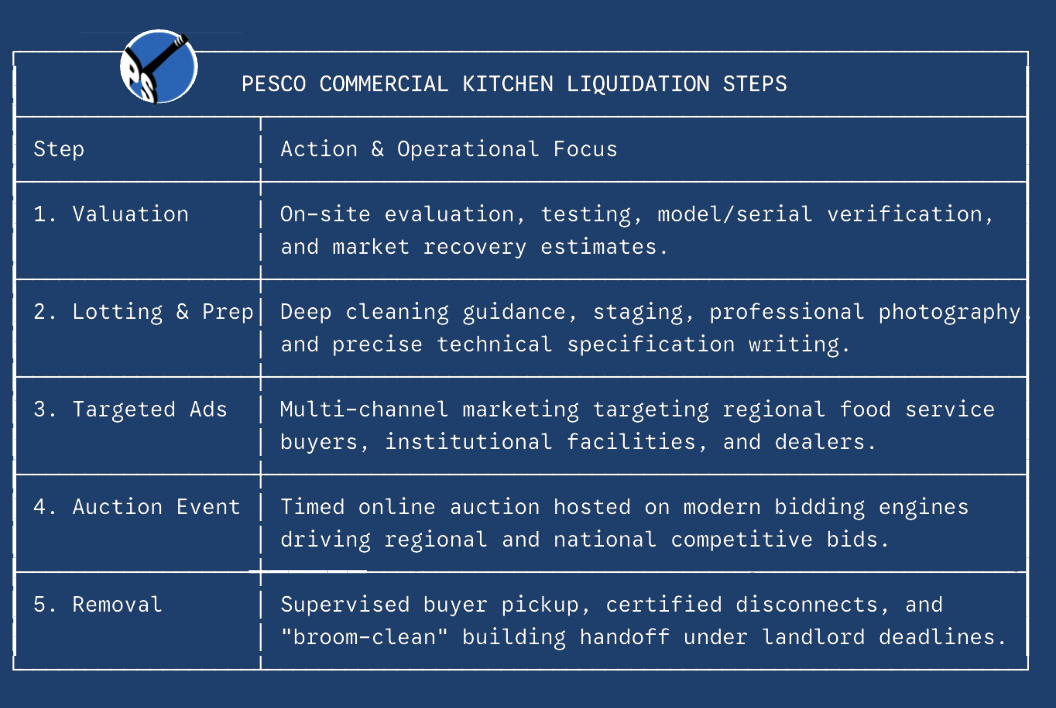
At Paul E. Saperstein Co., Inc., our team coordinates the entire lifecycle of the auction event:
- Cataloging & Professional Lotting: Equipment is systematically cleaned, tested, tagged, and photographed. Detailed listings include voltage specifications, phase requirements, gas types (NAT vs. LP), and physical dimensions—the exact technical details serious buyers rely on before placing high-value bids.
- Strategic Marketing Outreach: PESCO targets specialized mailing lists of food service executives, ghost kitchen operators, equipment refurbishers, and regional venue managers throughout Massachusetts, Rhode Island, Connecticut, and New Hampshire.
- Supervised Site Removal: Post-auction removal is heavily supervised. PESCO ensures buyers adhere to strict rigging, loading, and facility protection protocols, preventing damage to real estate infrastructure during building handoff.
5. Strategic Timing: When Should You Liquidate?
Knowing when to trigger an auction event directly impacts final recovery value. Food service operators utilize liquidations during key operational windows:
- Facility Remodels & Menu Pivots: Upgrading from standard ranges to specialized combi ovens or changing concepts entirely? Liquidate outgoing lines immediately to offset new capital expenditures.
- Lease Expirations & Site Consolidations: Landlords enforce strict “broom-clean” surrender clauses. Liquidating equipment on site eliminates high transport/storage fees and turns potential lease penalties into cash returns.
- Fleet or Multi-Unit Restructuring: Multi-unit franchisees and restaurant groups utilize scheduled liquidations to clear decommissioned sites and standardize equipment across remaining active units.
Turn Surplus Kitchen Assets into Immediate Cash Flow
Surplus food service equipment does not need to gather dust or drain monthly revenue in storage. By partnering with an experienced equipment auction house with decades of New England market experience, food service operators can transform unused appliances, stainless steel, and fixtures into working capital quickly, transparently, and efficiently.
Since 1962, Paul E. Saperstein Co., Inc. (pesco.com) has delivered comprehensive appraisal, valuation, and asset liquidation services across New England. Our experienced team handles every detail—from initial evaluation to final site clearance—ensuring maximum recovery value for your commercial kitchen equipment.
Contact Paul E. Saperstein Co., Inc. today at 617-227-6553 to schedule a confidential asset consultation with an industrial liquidation expert.